JavaScript, the language that is credited with “running the internet,” has a long history in programming. It was originally designed as a frontend language and used to create websites interactive by providing drop-down menus, maps, forms, video players, and modals in 1995. JavaScript’s transition from client to server-side (like Node.js) has been a long and arduous process. Since then, the language has established a firm footing as a powerful backend language in its own right.
JavaScript is not a particularly complicated language, despite its wide applicability and vast network of libraries. It’s actually quite friendly thanks to its readable syntax and dynamic typing. Let’s look at why it’s such a wonderful first (or second, or third) programming language as well as some tips for absorbing it.
What Is JavaScript, And Why Should You Learn It?
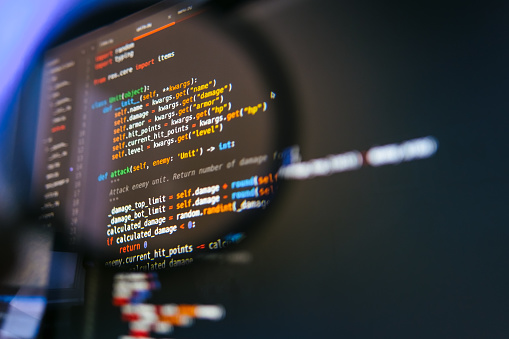
Let’s take a look at each component. JavaScript is typically used as a client-side programming language for website development. This simply refers to developers using JavaScript to create the visible and interactable portion of a website, also called the “front end.” While the programming language is capable of producing sophisticated programs, its primary application is in web development.
The majority of the elements on a web page are created by front-end developers using JavaScript in combination with two markup languages, HTML and CSS, to produce all of the visible objects that a user may interact with immediately. HTML code is used to perform the most frequent activities such as purchases, feedback submission, and even logins.
CSS, on the other hand, focuses more on formatting and appearance; it allows creators to describe how the HTML should appear to a visitor. Both, however, are static. A web page is unchanging and rather basic simply based on HTML and CSS alone.
A website becomes dynamic with JavaScript. It not only automates procedures that users would have to do manually in an HTML-only site, but it also gives a website the ability to react to a user’s input. JavaScript may be observed in the background working on various types of tasks. Autocorrect, slideshows, and interactives are just a few examples of what it can accomplish.
Regardless of how it works, JavaScript is a popular programming language because of its ability to do things with ease and simplicity. It’s also one of the most straightforward computer languages to learn and use, often being one of the first that inexperienced coders encounter when they begin.
“JavaScript is quite simple to use,” reports a Web Platform journalist. “All you have to do is fill out this HTML document with your code and tell the browser that it’s JavaScript, then JavaScript lets you produce highly responsive interfaces that improve the user experience while also providing dynamic functionality without having to wait for the server to react and display another page. ” It’s quick, adaptable, and can even help you troubleshoot and identify issues via its browser capabilities.
Easy Tips To Learn JavaScript Fast

Practice Actively
Another method to learn JavaScript quickly is to practice frequently. It implies that you write code more frequently than merely viewing or reading tutorials.
When you put your hands and feet to work like in playing football or operating a vehicle, you’re really learning. You learn quicker when you write JavaScript code on the computer than when you write it by hand.
Make an effort to code for at least 30 minutes or one hour each day. You will learn more about JavaScript faster if you write code on a daily basis and apply what you’ve learned.
Don’t forget to take time off once a week or so. Learning JavaScript is more enjoyable when you are well-rested, and it helps to boost your attention.
Follow A Well-Structured Curriculum
Never learn anything that comes your way. You must complete a specified curriculum. If you go to a boot camp, you’ll almost certainly follow a set curriculum while learning. However, being a self-taught developer, it is your responsibility to find a standard structure to help you traverse the territory safely. This ensures that you don’t overlook anything important about the topic.
I am a big fan of freeCodeCamp. They provide a clear structure for you to follow in order to be on the right track. If you want to go even further, look at some of the online learning platforms such as Udemy or Coursera for a formal curriculum. However, the most essential aspect of this step is to have something that will help you navigate your studies. Start learning and practicing as soon as possible after putting together a well-organized course.
Build Lots Of Projects With JavaScript
This is a question about active practice. Learning JavaScript faster is something that can be achieved through the creation of projects. The major advantage is that creating these projects – even simple ones – will help you cement your understanding of the lessons.
You’ll be put to the test to see whether you can correctly utilize JavaScript concepts.
If you don’t, it is still a good thing since you’ll learn what you don’t know and utilize it to fill any knowledge gaps in your JavaScript expertise. All of this will aid in the long-term growth of your JavaScript ability.
Knowing How To Search For Solutions
Whether you’re working on a project or not, if you spend years upon years studying tutorials either via videos or books, you will still run into difficulties. knowing how to create answers is one of the most essential abilities.
It’s inevitable that you’ll get stuck working on projects. As a result, it is your duty to find a solution to any issue you encounter.
Google and Stack Overflow are usually your friends. However, you should always start with Google to see what options you have. You’ll be shocked at how much knowledge you can get in such a short time by doing this.
Meetups And Networking Events
“Networking” isn’t necessarily the first (or most conventional) response that comes to mind when you’re looking for ways to master JavaScript — but it’s one of the most important.
The educational advantages of attending meetups and networking events are enormous. If you want to learn JavaScript fast, going to seminars on the language will let you learn from individuals that have a lot of expertise with it. The presentation is only the beginning; what you learn in conference rooms, boardrooms, and seminars does not stop there. It continues in the discussions you have after the meetings.
“You may believe you don’t need friends, but trust me — this kind of connection with like-minded people is exactly what you need,” business and career writer Peter Tourian wrote for Forbes. “It feels great to help people, and it’s amazing how much you learn and gain by doing all you can to help others.”
The greatest way to learn JavaScript isn’t necessarily to sit at a computer with your nose to the grindstone or in a book; it’s to interact with individuals who are learning, experimenting, and achieving alongside you.

Brian Taylor is a JavaScript developer and educator, dedicated to demystifying programming for newcomers. With a career spanning over a decade in web development, Brian has a deep understanding of JavaScript and its ecosystem. He is passionate about teaching and has helped countless beginners grasp the fundamentals of JavaScript, enabling them to build their own web applications.