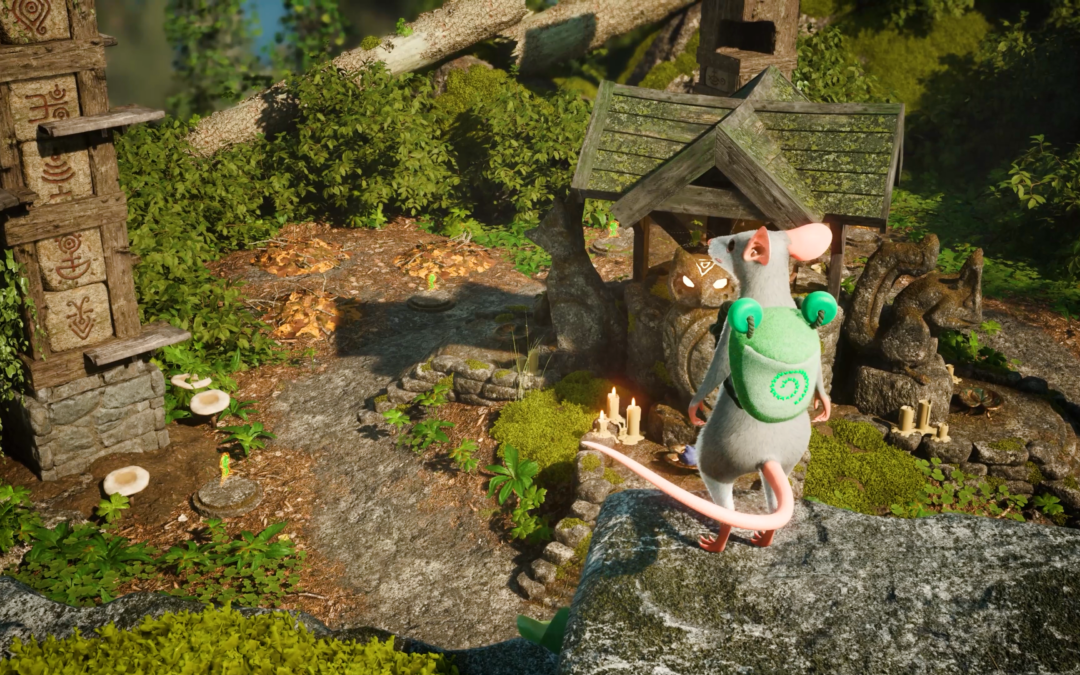
Hela: Of Mice & Magic sits at the center of 2026’s most interesting genre conversation. The game, developed by Windup (Umeå, Sweden) and published by KnightsPeak, a division of My.Games, isn’t just riding a wave of gentler, lower-stakes adventures.
It’s making the case that low stakes and low depth are two entirely different things. Physics puzzles, a named Froggy backpack companion, and the Shade System are what back that claim up.
Key Takeaways
- Hela: Of Mice & Magic supports up to four players online and two-player local split-screen.
- The game arrives on PC (Steam, Epic Games), PlayStation, Xbox, and Nintendo Switch 2 in 2026.
- Windup’s title has crossed 1 million wishlists ahead of its 2026 launch.
- Low-stakes play removes failure punishment; low-depth design removes meaningful choice.
- The Shade System, physics puzzles, and animal-companion progression are its three mechanical pillars.
How Does the 2026 Relaxing-Adventure Trend Differ from the Farming-Sim Wave That Preceded It?
The 2026 relaxing-adventure genre has grown well past crop rotations and harvest timers. DualShockers reported in March 2026 that the category grew from farming and management games to include exploration and puzzle adventures. A new group of games now focuses more on curiosity than just finishing tasks.
This shift changes what “relaxing” actually means. Earlier farming sims built their calm around repetitive daily loops: plant, water, sleep, repeat. The newer wave builds it around freedom. Go where you want. Solve what you find. Come back later if you don’t feel like it now.
That temperament change opened a real question. When a game removes failure states and timed pressure, does it still have anything to teach you? Does the world respond to your choices, or does it just look pretty while you walk through it? These aren’t unfair questions. They’re the questions any thoughtful player asks before committing to a 2026 wishlist.
What Is Hela: Of Mice & Magic and Why Was It Renamed from Hela?
Hela: Of Mice & Magic began its public life simply as Hela, a name that captured the Scandinavian folklore setting but left the game’s spirit partly hidden. The full title makes the promise explicit: this is a story of mice, and it involves magic. The rename signals both the game’s scale and its tone. A hand-crafted open world where a tiny mouse heals a fading Scandinavian forest.
Windup, based in Umeå, Sweden, brings a creative lineage rooted in shared leadership with the team behind Unravel. Hela: Of Mice & Magic is a follow-up in spirit, not an official sequel. It keeps the warmth and accuracy of the earlier work while creating its own identity.
You play solo or with up to four players online. Two-player local split-screen is also supported. The forest is fading, an old witch’s affairs need tending, and a small mouse with a remarkable backpack is the only one for the job. That’s the premise. The mechanics are where it gets genuinely interesting.
What Specific Mechanics Give Hela Genuine Depth Beneath Its Wholesome Surface?
Preview coverage from jeu.video in May 2026 raised a concern that players shopping this genre will recognize: “in many cozy adventures, the world looks lovely but plays thin.” The same coverage noted cautious optimism about Hela’s animal-companion systems providing a stronger mechanical hook than most genre entries manage.
That optimism has three concrete foundations.
How the Shade System Works: Key Mechanics Explained
The Shade System governs how the world responds to your presence and choices. It isn’t a traditional leveling bar. Think of it more as a record of how you’ve engaged with the forest.
- Choices during low-stakes moments branch into different companion bond states over time.
- Curiosity and exploration feed the system, not combat or resource grinding.
- Different interaction paths produce different ability expressions, rewarding players who poke at the world.
- The system operates quietly, without presenting itself as a visible progress meter.
That last point matters. When systems are invisible, players discover them rather than optimize toward them. That distinction separates games with genuine depth from games that just display numbers going up.
Physics Puzzles and Animal-Companion Progression
The physics puzzles in Hela have no single correct solution. Object weight, trajectory, and your current companions all factor in differently depending on what you’ve done so far. Two players approaching the same puzzle an hour apart will likely solve it differently. That’s the sign of a well-built system.
Animal-companion progression adds another layer. Befriending forest creatures isn’t decoration. Each companion opens new traversal options and puzzle-solving interactions. The bonds deepen through curiosity and kindness, not through grinding a relationship meter.
How Does the Froggy Backpack and Open-World Traversal System Support Self-Paced Exploration?
Your Froggy backpack isn’t a generic item. Froggy is a named character, and the swing-and-glide traversal Froggy enables is the engine of the whole open world. You swing across the canopy, glide between branches, grapple toward hidden ledges, and climb toward whatever caught your eye three minutes ago.
The world doesn’t funnel you. There’s no objective marker blinking on a map. It won’t demand you address something before you can go somewhere more interesting. You forage when you feel like foraging. You brew when you’ve gathered enough. The heartfelt story of tending the old witch’s affairs advances because you’re curious, not because a timer is running.
This traversal design directly answers the “plays thin” concern. A world you can swing across from almost anywhere, at any angle, with a companion who changes how you move, is a world with genuine physical presence. You feel the scale of the forest through your mouse’s body. That’s not aesthetics. That’s systems design with a warm aesthetic sitting on top.
Platforms, Release Window, and Where to Wishlist
Hela: Of Mice & Magic launches in 2026 across PC (Steam, Epic Games), PlayStation, Xbox, and Nintendo Switch 2. The game has crossed 1 million wishlists, which reflects genuine audience anticipation across that platform spread.
Wishlisting on Steam or Epic Games is the clearest way to follow launch news as the 2026 window approaches. The game’s co-op options support up to four players online or two-player local split-screen, which means wishlisting a single copy is often a decision you’re making for a group.
Mechanical Depth Across 2026 Exploration Adventure Features
| Feature | Low-Depth Approach | Hela: Of Mice & Magic Approach |
|---|---|---|
| Puzzle Design | Single correct solution, repeated | Physics-based, player-determined solutions |
| Companion Systems | Cosmetic animal friends | Befriendable creatures with traversal and puzzle impact |
| Progression Feedback | Visible XP bar or resource counter | Shade System: quiet, curiosity-driven branching |
| Traversal | Walk from point A to point B | Froggy backpack swing, glide, grapple, and climb |
| World Response | Static environments, decorative NPCs | Forest heals as you act; your choices shape it |
Why Adventure With a Gentle Temperament Is Worth Your 2026 Wishlist
The forest in Hela: Of Mice & Magic is fading. That’s not just backstory. Every potion you brew, every animal you befriend, every physics puzzle you solve in your own particular way contributes to something that was broken before you arrived. Windup built a world where the stakes are low but the meaning isn’t.
A mouse swings across the canopy at dusk, Froggy trailing behind, a freshly brewed remedy tucked away for later. That image isn’t calming. It’s alive. The Shade System noted something earlier, and you didn’t even realize it. The forest is a little brighter than it was an hour ago. Wishlist Hela: Of Mice & Magic on Steam or Epic Games and follow it into 2026.
Frequently Asked Questions
Has Hela: Of Mice & Magic been released yet, and what platforms will it launch on?
Hela: Of Mice & Magic hasn’t launched yet. Windup and publisher KnightsPeak, a division of My.Games, have confirmed a 2026 release window across PC (Steam, Epic Games), PlayStation, Xbox, and Nintendo Switch 2. The game has passed 1 million wishlists in the lead-up to launch, making it one of the more watched open-world adventure releases of the year.
What makes Hela: Of Mice & Magic different from other wholesome exploration games in 2026?
Hela separates itself through three specific systems: physics puzzles with no single correct solution, animal-companion progression that changes how you move and solve problems, and the Shade System, which branches quietly based on curiosity rather than grinding. Most wholesome exploration games offer a lovely world to walk through. Hela offers a world that responds to how you engage with it.
Is Hela: Of Mice & Magic suitable for non-gamers or younger players?
The game is built around self-paced exploration with no punishing fail states, which makes it genuinely accessible. There’s no combat pressure, and puzzles can be solved in whatever order or manner feels right to you. Up to four players can join online, and two-player local split-screen is supported, making it a strong option for shared play between experienced players and newcomers.
Does the relaxing-adventure genre actually offer deep gameplay, or does it mostly look good?
Jeu.video raised this concern in May 2026, noting that “in many cozy adventures, the world looks lovely but plays thin.” The distinction worth drawing is between low-stakes play and low-depth systems. Low stakes means no punishment for failure. Low depth means nothing to learn or master. Those are different things, and the best 2026 entries in this genre, Hela among them, build real mechanical depth into their gentle worlds.
How does co-op work in Hela: Of Mice & Magic?
Online co-op supports up to four players, with drop-in play so friends can join your forest exploration without requiring a session restart. Local split-screen supports two players, making it a good option for shared-screen play at home. The self-paced design means co-op feels collaborative by nature rather than competitive, which fits the game’s heartfelt, curiosity-first approach to world exploration.

Brian Taylor is a JavaScript developer and educator, dedicated to demystifying programming for newcomers. With a career spanning over a decade in web development, Brian has a deep understanding of JavaScript and its ecosystem. He is passionate about teaching and has helped countless beginners grasp the fundamentals of JavaScript, enabling them to build their own web applications.